
Iron Meets Intelligence: How Caterpillar and Nvidia are Reimagining the Future of Construction
For nearly a century, the name Caterpillar (Cat) has been synonymous with raw, mechanical power. It represents the “Heavy Iron”—the massive, yellow machines that move the earth, build our cities, and dig our mines. On the other side of the technological spectrum sits Nvidia, a company that has spent the last decade transforming itself from a gaming chip manufacturer into the undisputed sovereign of the artificial intelligence revolution.
At the 2026 Consumer Electronics Show (CES), these two titans from vastly different worlds announced a partnership that signals a new era for the industrial world. This isn’t just about putting a screen in a tractor; it is about the birth of “Physical AI.” By integrating Nvidia’s cutting-edge Jetson Thor platform into Caterpillar’s fleet, the companies are proving that the next great leap for AI isn’t happening in a data center or on a smartphone—it’s happening in the dirt.

The CES 2026 Breakthrough: The Cat 306 CR Mini Excavator
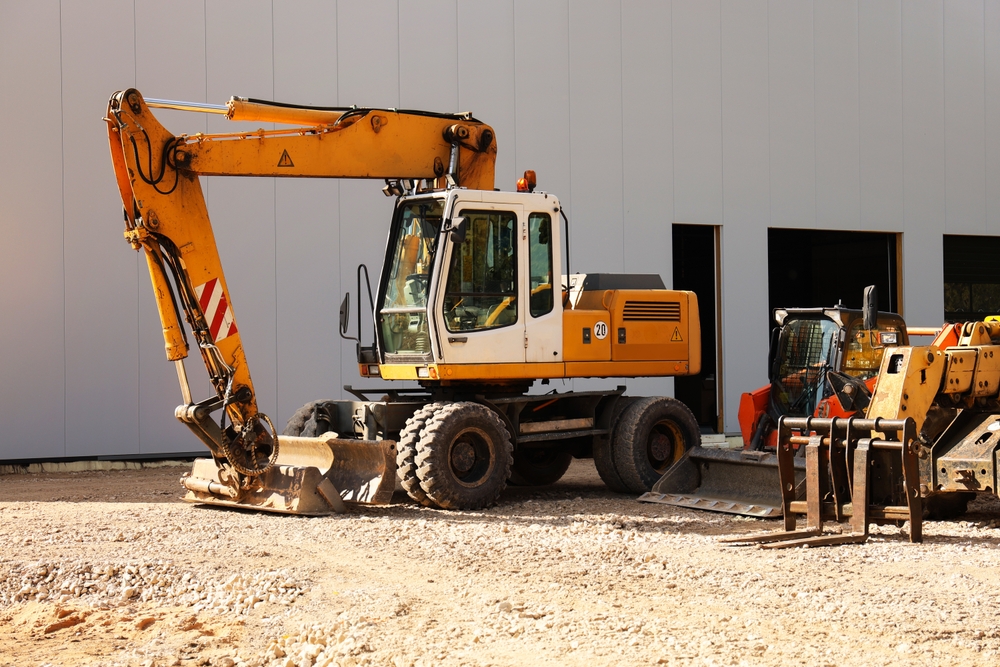
The centerpiece of this announcement was a mid-size Cat 306 CR Mini Excavator, but this wasn’t your standard piece of rental equipment. Inside this machine lives the Cat AI Assistant, a sophisticated digital co-pilot built specifically for the grueling, unpredictable environment of a construction site.
Built on Nvidia’s Jetson Thor platform, the Cat AI Assistant represents a significant departure from the chatbots we’ve become accustomed to. While a tool like ChatGPT is designed to handle text and images, the Cat AI Assistant is designed to handle the physical world. It is an “AI agent” that understands the mechanics of the machine, the geography of the job site, and the safety protocols required to keep workers alive.
Brandon Hootman, Caterpillar’s vice president of data and AI, explained that the system is more than just a help menu. It is an active participant in the work. Operators can ask the assistant complex questions, request safety tips in real-time, or even have the system schedule its own maintenance services based on the wear and tear it detects in its own sensors. This proactive approach aims to reduce downtime, which is the single most expensive factor in any major construction project.
What is “Physical AI” and Why Does It Matter?
To understand why this partnership is so significant, we have to look at the concept of Physical AI. For the past few years, the world has been obsessed with “Generative AI”—AI that creates content. But as Nvidia’s chief scientist, Bill Dally, pointed out as early as 2025, the real “next frontier” is AI that can perceive, reason, and act in the physical world.
Nvidia’s Jetson Thor is the engine driving this transition. It is a “System-on-a-Chip” (SoC) designed specifically for functional robotics. It possesses the massive computational power required to process data from cameras, LiDAR, and ultrasonic sensors simultaneously, allowing a machine to “see” its surroundings and react to them in milliseconds.

When you put this kind of brain into an excavator, the machine stops being a passive tool and starts becoming an intelligent partner. It can detect a buried utility line before the bucket hits it; it can calculate the optimal angle to dig a trench to save fuel; and it can guide a novice operator to perform like a twenty-year veteran. This helps solve one of the biggest crises in the construction industry today: the massive shortage of skilled operators.
Living in the Dirt: The Importance of Edge Data
One of the most poignant points made by Brandon Hootman during the CES debut was about the environment of his customers. “Our customers don’t live in front of a laptop day in and day out; they live in the dirt,” Hootman remarked.
This is a fundamental truth that many tech companies overlook. In a plush office in Silicon Valley, high-speed Wi-Fi and air conditioning are guaranteed. On a construction site in the middle of a desert or a muddy mountainside, those luxuries don’t exist. The “Cat AI Assistant” is designed to bring the power of the cloud to the edge—meaning the intelligence lives on the machine, not on a remote server miles away.
The benefit of this is twofold. First, it provides the operator with instant insights. They don’t have to stop working, climb out of the cab, and check a manual or a tablet. They can take action while they are “in the dirt.” Second, it creates a massive feedback loop of data. Caterpillar’s machines currently send roughly 2,000 messages back to the company every single second. This isn’t just noise; it is a granular, second-by-second diary of how the world is being built, which helps Caterpillar refine their designs and predict failures before they happen.
Digital Twins and the Power of the Nvidia Omniverse
Caterpillar isn’t just using AI to help the person in the cab; they are using it to rethink how entire construction sites are managed. Through the use of Nvidia’s Omniverse, Caterpillar is piloting “Digital Twins” of their job sites.
A Digital Twin is a perfect virtual replica of a physical location. By feeding the 2,000 messages per second from their fleet into the Omniverse simulation library, Caterpillar can create a real-time, 3D map of a project. This allows project managers to:
- Test Scheduling Scenarios: What happens to the timeline if three machines break down? The simulation can tell them.
- Material Calculation: Precisely calculate how much dirt needs to be moved and how much gravel or concrete will be required, reducing waste and saving millions of dollars.
- Safety Simulations: Identify “high-risk” zones on a site before a human ever steps foot in them, significantly reducing workplace injuries.

From the Mines to the Mainstream: The Path to Autonomy
While the Cat AI Assistant is a “pilot program,” Caterpillar is no stranger to automation. In the mining sector, Caterpillar has been a leader for years, with hundreds of fully autonomous massive trucks operating in remote locations around the world. These trucks don’t have cabs; they operate 24/7 without a human driver, navigating deep pits with centimeter-level precision.
The challenge has always been bringing that level of autonomy to the “mainstream” construction site. Mining sites are controlled, private environments. A construction site in the middle of a city is chaotic, filled with unpredictable pedestrians, varying weather, and different types of soil. Hootman noted that starting with an “AI Assistant” in a mini-excavator was a strategic choice. It addresses a real, immediate challenge—the labor shortage—while providing a “technology foundation” that Caterpillar can build upon toward a fully autonomous future.
The Cybersecurity Angle: Protecting the Steel Giants
As a tech and security-focused outlet, we must also look at the darker side of this hyper-connectivity. When a machine is sending 2,000 messages a second and receiving updates from the cloud, it becomes a node on a network. In the world of Cybersecurity, this is known as a massive “attack surface.”
The prospect of a 30-ton excavator being compromised by a malicious actor is a terrifying one. This is why the partnership with Nvidia is also a security play. Nvidia’s industrial platforms are built with hardware-level security, designed to ensure that the code running the machine hasn’t been tampered with. As Caterpillar moves closer to full autonomy, the “Cat AI Assistant” will likely evolve to include defensive AI—software that monitors the machine’s own network traffic to detect anomalies that could indicate a cyberattack, ensuring the physical world remains as safe as the digital one.
Nvidia’s Strategy: Becoming the “Android of Robotics”
For Nvidia, the partnership with a “legacy” brand like Caterpillar is a validation of their long-term strategy. Deepu Talla, Nvidia’s vice president of robotics and edge AI, has been vocal about the company’s desire to be the underlying platform for all generalist robotics. Whether it’s a humanoid robot working in a factory, an autonomous car, or a 20-ton Caterpillar excavator, Nvidia wants the “brain” to be theirs. By providing the full-stack ecosystem—the chips, the simulation, and the AI models—Nvidia is making it nearly impossible for industrial companies to build their own systems from scratch.
Conclusion: A New Industrial Revolution
The collaboration between Caterpillar and Nvidia is more than just a headline from CES 2026. It is a glimpse into a future where the line between the digital and the physical is completely erased. We are moving toward a world where the “Heavy Iron” is as smart as the people operating it. This technology has the potential to make construction faster, cheaper, and safer. By giving machines the ability to “think” and “see” through Physical AI, Caterpillar and Nvidia aren’t just changing how we dig holes; they are changing how we build the world.
Summary of Key Features
| Feature | Details |
|---|---|
| Primary Partnership | Caterpillar & Nvidia |
| Key Platform | Nvidia Jetson Thor (Physical AI) |
| Demo Machine | Cat 306 CR Mini Excavator |
| Data Throughput | ~2,000 messages per second per machine |
| Core Technologies | Cat AI Assistant, Nvidia Omniverse, Digital Twins |
External and Internal Links
- Official Caterpillar Autonomous Solutions (External)
- Introduction to Nvidia Jetson Thor (External)
- Explore More AI Tech Trends (Internal)
- Jump to Frequently Asked Questions (Internal)
Frequently Asked Questions (FAQ)
1. What makes “Physical AI” different from standard AI?
Physical AI refers to artificial intelligence that is designed to interact with the real, physical world through sensors and movement, rather than just processing text or images in a digital environment.
2. Will the Cat AI Assistant work without an internet connection?
Yes. Thanks to the “edge computing” power of Nvidia Jetson Thor, most of the AI processing happens directly on the machine’s hardware, allowing it to function even in remote locations without Wi-Fi.
3. How does this help the labor shortage in construction?
By providing real-time assistance and safety tips, the AI allows less-experienced operators to perform complex tasks safely and accurately, effectively bridging the skills gap.
4. Is Caterpillar planning to launch fully autonomous excavators?
While the current program is an “assistant,” it serves as the technological foundation for full autonomy in the future, similar to the autonomous trucks already used in mining.
Leave a Reply