
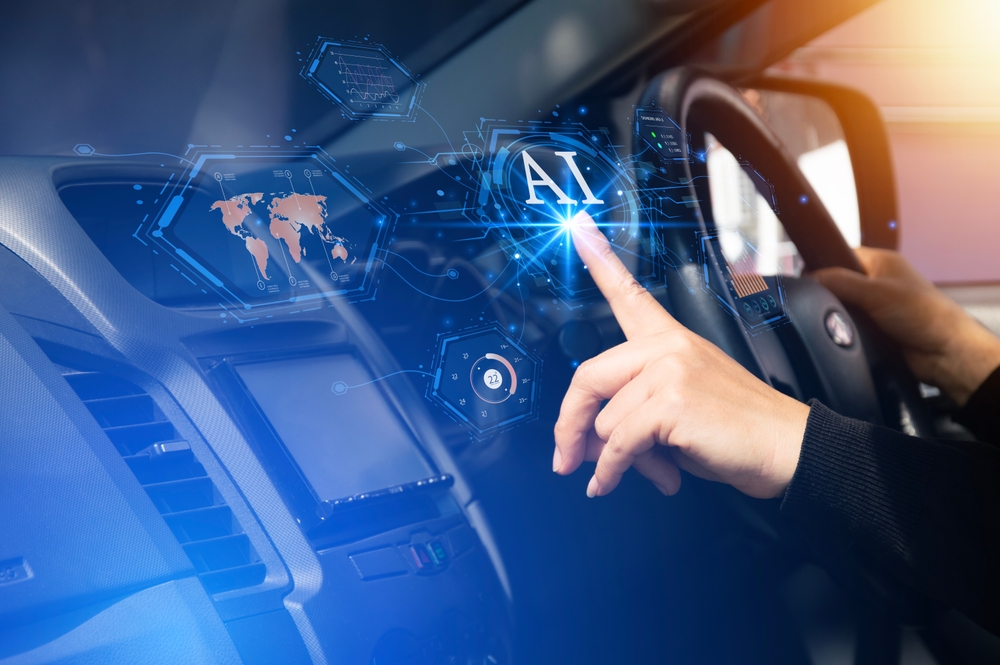
Ford’s Big Jump into the Future: A Close Look at the New AI Assistant and Next-Gen BlueCruise
The car is going through the biggest change in a hundred years. The modern car is quickly changing from a simple machine with horsepower and steel to a high-tech “smartphone on wheels.” Ford has just made a big move in this high-stakes race for the future of transportation. The company is taking a big risk by making big plans for a smart Ford AI assistant and the next step in the evolution of its popular BlueCruise hands-free driving technology.
Ford’s Quietly Confident CES 2026 Announcement: A Change in Strategy
Ford made a big and smart announcement at the 2026 Consumer Electronics Show (CES) about its full plan for next-generation in-car technology. The announcement was important not only because of what was said, but also because of how it was made. In the late 2010s, automakers used to put on big, flashy, multi-million-dollar keynote speeches at CES. Those days are over. Ford chose a more focused “Great Minds” speaker session instead. This is a platform for exploring the important connection between technology and people. This shows that the strategy is mature and confident, and it focuses on substance over show.
Ford talked about two ways to attack the future of the digital cockpit during this session. The first pillar is a strong AI assistant that will act as the brain of the car. The second is a completely new version of the BlueCruise system that makes the car’s physical autonomy much better. This dual announcement shows a big-picture view in which an advanced assistance system makes driving easier on the driver’s mind and body at the same time.
Deep Dive: The Ford AI Assistant – More Than Just a Voice in the Machine
Ford says that its AI co-pilot will do much more than just follow voice commands for music or directions. The company is using “off-the-shelf” Large Language Models (LLMs) as the basis for its digital assistant and taking advantage of the Google Cloud platform’s huge power. Let’s talk about why this is so important.
Using Google Cloud and LLMs
Ford can speed up development a lot by using established LLMs. This is because they can build on a huge amount of existing knowledge instead of starting from scratch. The partnership with Google Cloud is just as important. It has the global scalability, enterprise-grade security, and cutting-edge AI infrastructure needed to handle huge amounts of data in real time. Because this is a cloud-based system, the assistant can get smarter over time through over-the-air (OTA) updates, so you don’t have to buy new hardware for your car.
The Strength of Data That Is Specific to a Vehicle
Ford’s AI stands out because it can deeply and natively integrate with data that is specific to each vehicle. This turns the assistant from a basic chatbot into a real expert on your car. Ford’s first example, “What is the maximum weight of mulch my F-150’s truck bed can handle?” is just the beginning. Think about all the things that could happen:
- Proactive Maintenance: “Your tire tread is probably getting low because of how you drive and how many miles you have on it right now. There are three certified service centers near your office that have open appointments this week. Should I book one?”
- Planning a complicated trip: “We’re going on a ski trip. Based on the weather forecast for the mountain and the amount of battery I have left, I’ve planned a route that includes the best place to charge my phone. I’ve also made the cabin warm ahead of time so it’s ready for us to leave.”
- Diagnostics on the fly: “The light that says ‘check engine’ just came on. I did a diagnostic test and found that there is a small leak in the evaporative emissions. You can keep driving, but I suggest having it looked at. These are the three mechanics on our route with the best reviews.”
A Plan for a Phased Rollout
Ford is smart to roll out in phases. The redesigned Ford smartphone app will be the first place to see the AI assistant, which will be available in early 2026. This “soft launch” is a smart move because it lets the company get important user data, improve the AI’s answers, and fix bugs in a safe setting. It helps people get used to the system before it is fully integrated into the car’s important dashboard systems in 2027.

How Ford Stacks Up in the Digital Cockpit Battlefield
Ford is getting into a very competitive field. Some details about its final in-car experience are still secret, but the current market gives a clear picture of the high-stakes fight for digital supremacy.
Competitors like Tesla have already added Elon Musk’s Grok chatbot, which uses real-time data and a unique personality to make one-of-a-kind experiences, like planning spontaneous sightseeing tours. On the other hand, the adventure-focused brand Rivian has shown off its own digital assistant that can handle difficult off-road navigation and vehicle-specific tasks. Even well-known luxury brands like Mercedes-Benz have been leaders in this area for years with their “Hey Mercedes” assistant and the huge MBUX Hyperscreen.
Ford’s strategy seems to be based on usefulness and practicality, using its extensive knowledge of its cars to offer real-world help that is actually useful. The hard part will be making an experience that is not only powerful but also seamless, easy to use, and, most importantly, not distracting to the driver. The Human-Machine Interface (HMI) challenge is where the fight for the best in-car experience will really take place.
How BlueCruise Changed Over Time: Making Autonomy Available to Everyone
The next-generation BlueCruise system, which is the second part of Ford’s announcement, could be even more game-changing. Ford wants to make advanced driver-assistance systems (ADAS) better, easier to use, and, in the end, more independent.
Getting the Leap: From “Hands-Free” to “Eyes-Off”
To understand the importance, it’s helpful to know what the SAE Levels of Driving Automation are. The current BlueCruise is a great SAE Level 2 system that lets you drive without using your hands on pre-mapped highways, but it needs constant driver supervision. Ford’s promise of “eyes-off” driving by 2028 means that the company is moving up to SAE Level 3. In this mode, the car is fully in charge of driving in certain situations, like when there is a traffic jam. This lets the driver really relax and do things like watch a movie. This is a huge change in the law and the technology, as the manufacturer is now responsible instead of the driver.
Lowering Costs is Important
Ford said that the new BlueCruise hardware is very important because it costs “thirty percent less” to make. This changes the game. This new technology won’t be limited to high-end Lincoln models or pricey special editions. It makes it possible for BlueCruise to become a standard or low-cost option on popular cars like the Mustang Mach-E and the F-150. This makes high-level driver assistance available to everyone.
The “Universal EV” Platform and Point-to-Point Autonomy
Ford’s new “Universal Electric Vehicle” platform makes this cost cut possible. When you plan the architecture from the ground up with this technology in mind, integration works much better. The first car on this platform, a mid-sized electric pickup that will come out in 2027, will have the new, cheaper BlueCruise system.
Ford is also working toward real “point-to-point autonomy.” This is a lot more advanced than just keeping your lane on the highway. It talks about a system that can handle the entire highway part of a trip, including on-ramps, interchanges, and lane changes, but only with the driver watching (as a Level 2 feature). This directly goes against what systems like Tesla’s Full Self-Driving (Supervised) can do.
Safety is still the most important thing, even with these amazing improvements. Ford, like all other car companies, says that the driver must always be alert and ready to take control, especially when using Level 2 systems. Advanced driver monitoring systems, which use cameras to follow the driver’s gaze, will always be an important and non-negotiable safety feature.

External and Internal Links
- Official Ford BlueCruise Technology Page (External Link)
- Automotive Solutions from Google Cloud (External Link)
- Find out about the SAE levels of driving automation (External Link)
- Read More About Car Technology (Suggested Internal Link)
- Go to the Frequently Asked Questions section (Internal Page Link)
Questions and Answers (FAQ)
- 1. When will the Ford AI assistant be ready to use?
- There will be a phased rollout of the assistant. In early 2026, it will first be available in the Ford smartphone app. Starting in 2027, some models will have full integration with the car.
- 2. How does the current BlueCruise differ from the “eyes-off” version?
- The current BlueCruise is an SAE Level 2 “hands-free” system that requires the driver to pay attention to the road. The promised “eyes-off” version will be an SAE Level 3 system. This means that the driver can stop paying attention to the road and look away from it under certain approved conditions, like when there is a traffic jam. The car will take full responsibility during that time.
- 3. Is this new technology going to cost a lot?
- Ford has designed the next generation of BlueCruise hardware to be 30% less expensive to make. The goal is to make this cutting-edge technology available in more of Ford’s cars, not just the most expensive ones.
- 4. What does “point-to-point autonomy” mean?
- This is a very advanced Level 2 feature that lets the system drive itself from an on-ramp to an off-ramp, changing lanes and navigating interchanges along the way, all without the driver having to do anything. But the driver still needs to keep an eye on the system at all times.
- 5. Do I need a Google account to use the Ford AI assistant?
- Ford hasn’t said what the exact requirements are yet, but the close connection with Google Cloud makes it likely that linking a Google account will unlock extra or personalized features, just like Android Automotive does in other cars. Details will probably come out closer to the launch in 2026.
Leave a Reply